Healthcare Smart
Environment (IOT)
An intelligent health app designed to optimize the use of smart environment resources in a hospital.
Problem Statement
How might we enhance the hospital experience for patients by monitoring patients' emotional states through smart IOT devices, enabling personalized care and communication from healthcare spaces and providers to patients?
Smart Environment Role
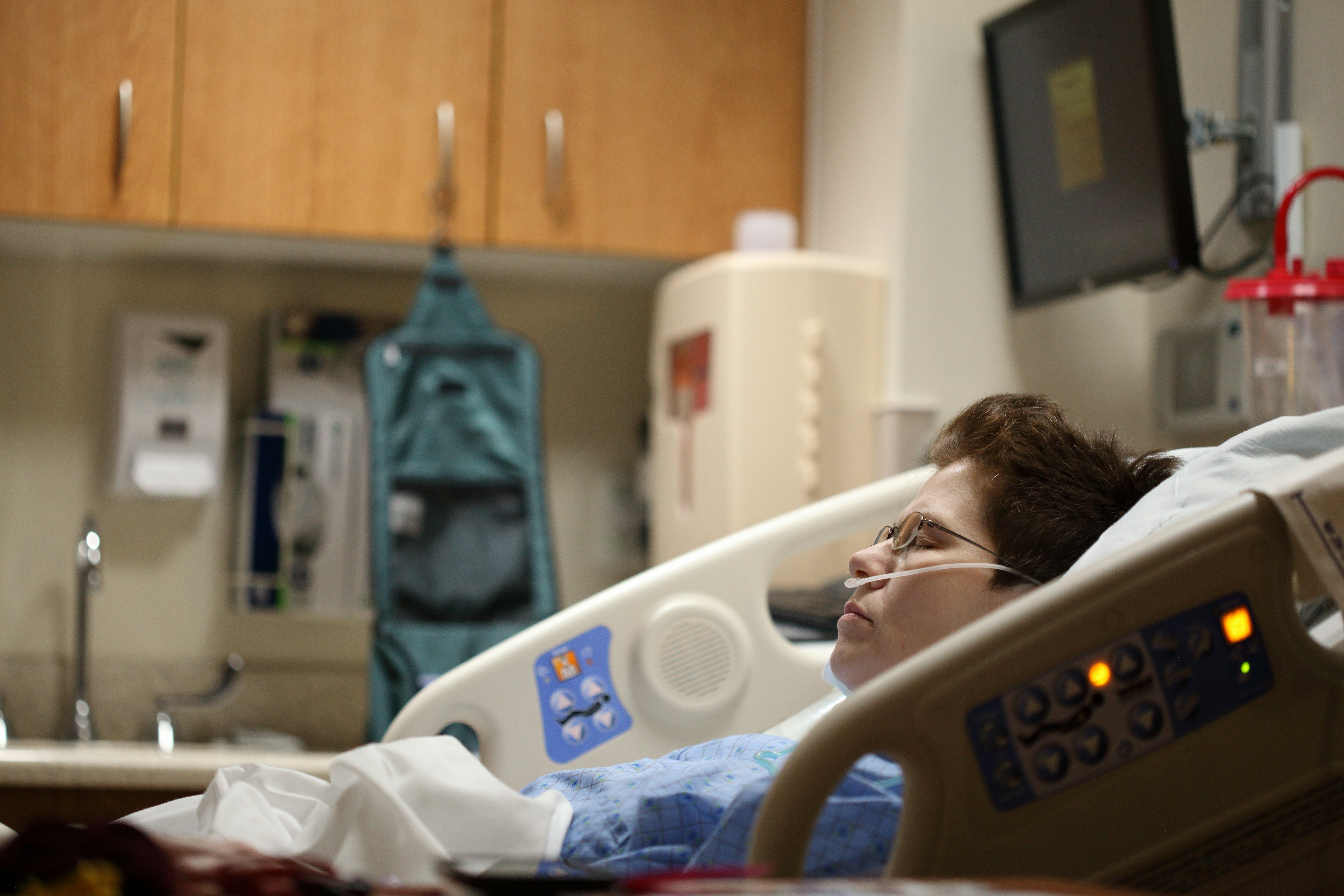
The smart environment (patient hospital room) will act in favor of the patient by attending to their emotional needs and feelings of pain and offering different smart devices or services to aid their recovery.
Research Insights with Google Scholar
Patients' Emotional Needs
Medical staff must attend to patients emotional needs during their hospital experience as they will be stressed, anxious, depressed, or in pain.
Patient Concerns
Doctors and nurses must ensure that they attend to the requests from patients urgently in the hospital, such as providing medications or urgent care as needed.
Clear Communication
Doctors must ensure patients agree with the designated treatment plan and are comfortable executing it.
User Empathy Map
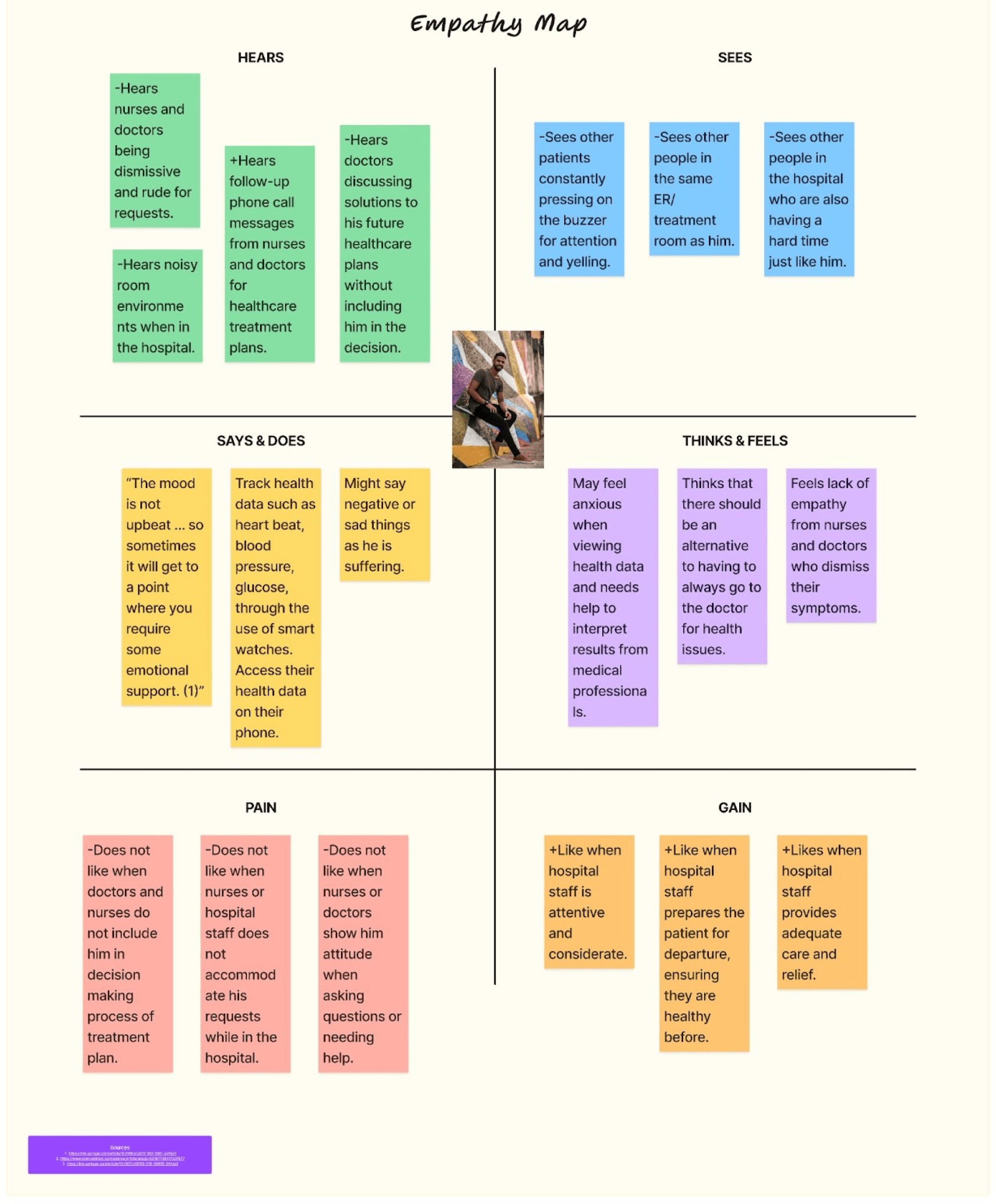
I created an empathy map to understand patients’ thinking patterns and emotional needs.
Here are the top 3 issues patients face:
Issue 1: Doctors do not often include patients in conversations about their treatment plan.
Issue 2: Healthcare teams do not always accommodate patient requests, such as turning down tv volume from a noisy fellow patient.
Issue 3: A lot of times, healthcare teams do not provide adequate pain relief for patients using medications.
Sketches
After researching the patient hospital experience, I developed concepts for smart hospital room environments aimed at addressing their concerns to spark the ideation process. My sketches explore using smart devices and IoT to enhance patient mental and physical health.
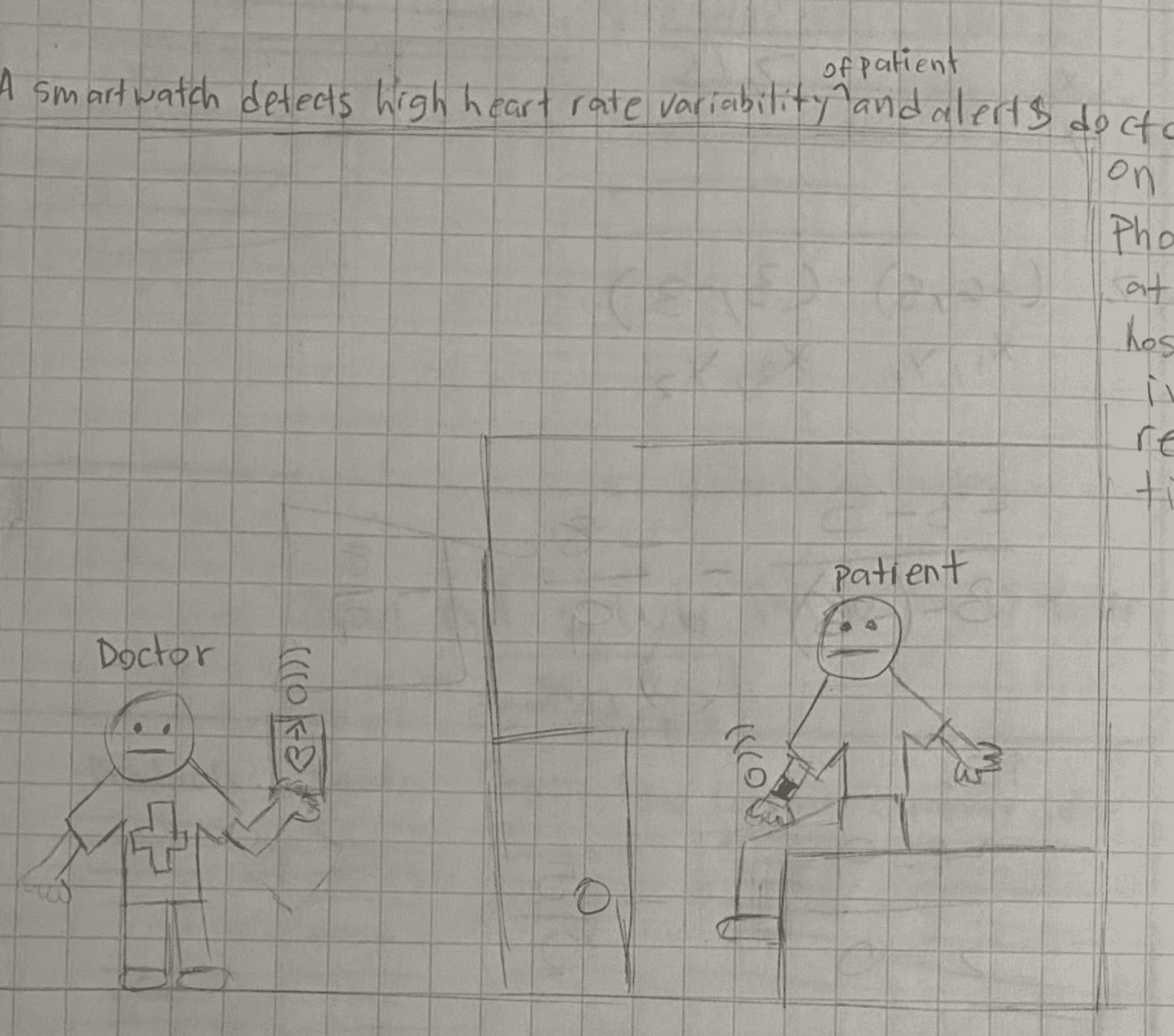
Sketch 1
Smart watch observes high heart rate variability of patient. Nurse or doctor promptly follows up.
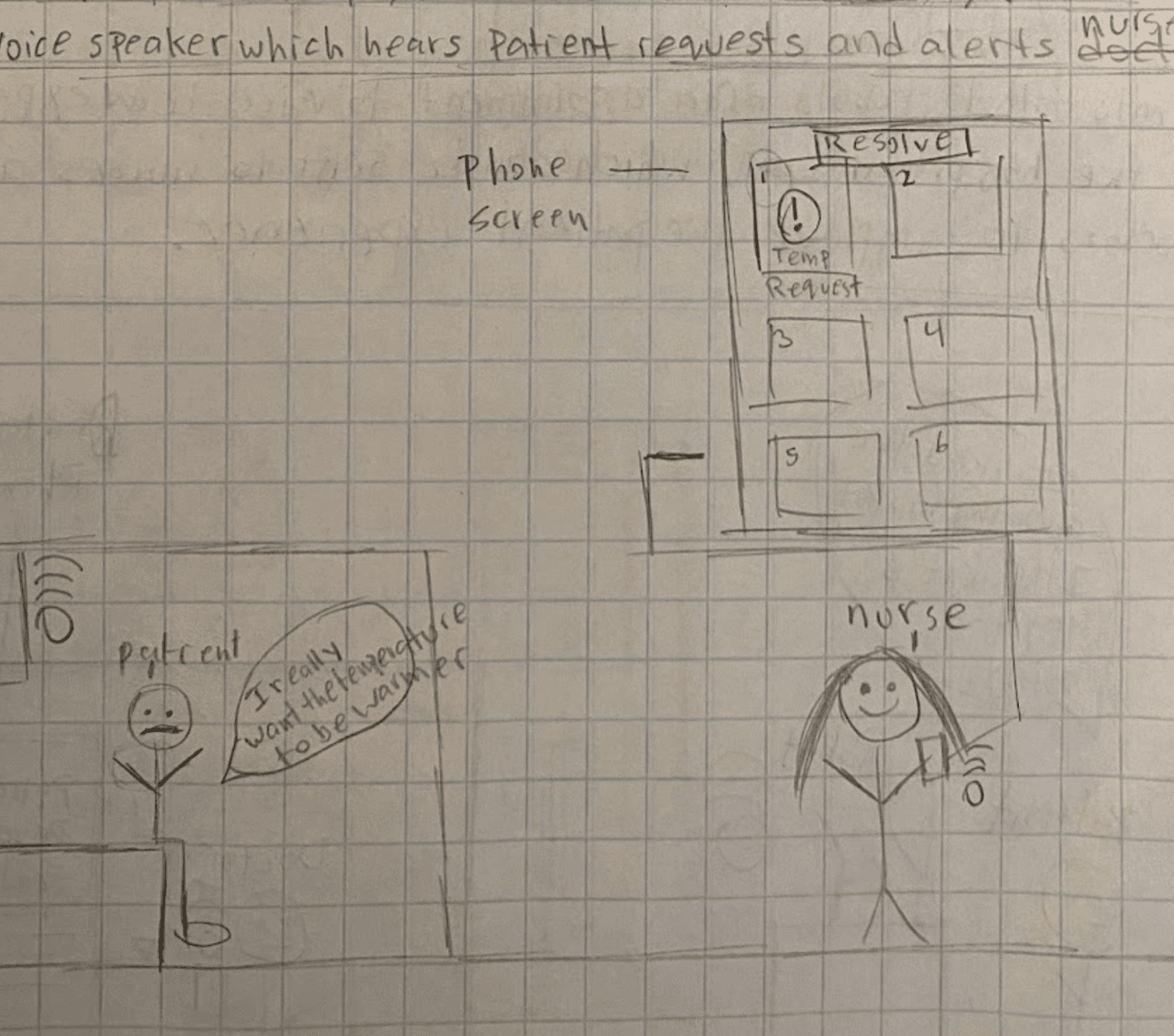
Sketch 2
Smart speaker detects patient requests in hospital rooms and notifies medical staff, e.g. adjusting temperature.
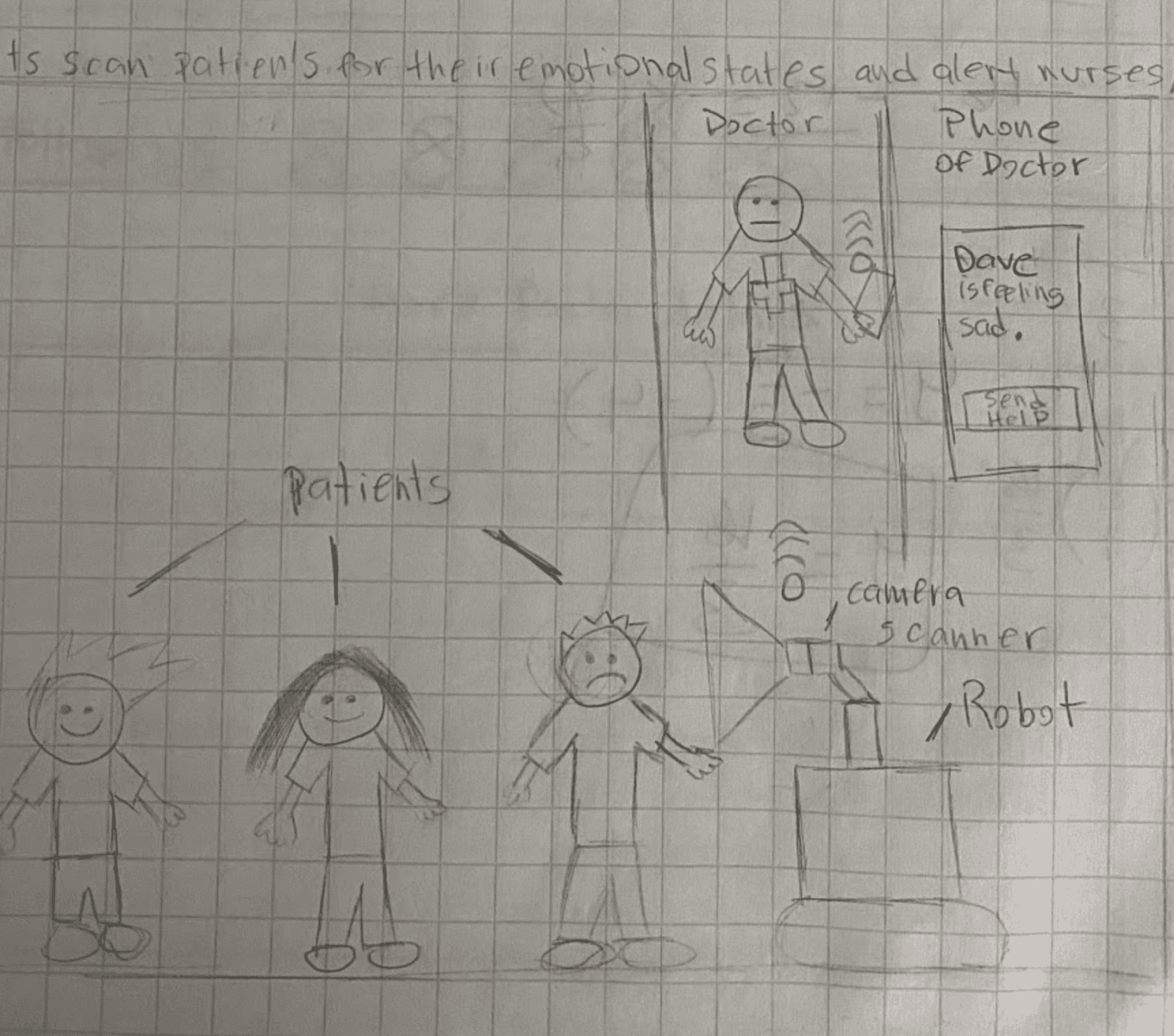
Sketch 3
Robot scans faces to detect patient emotions and alert medical staff of distress.
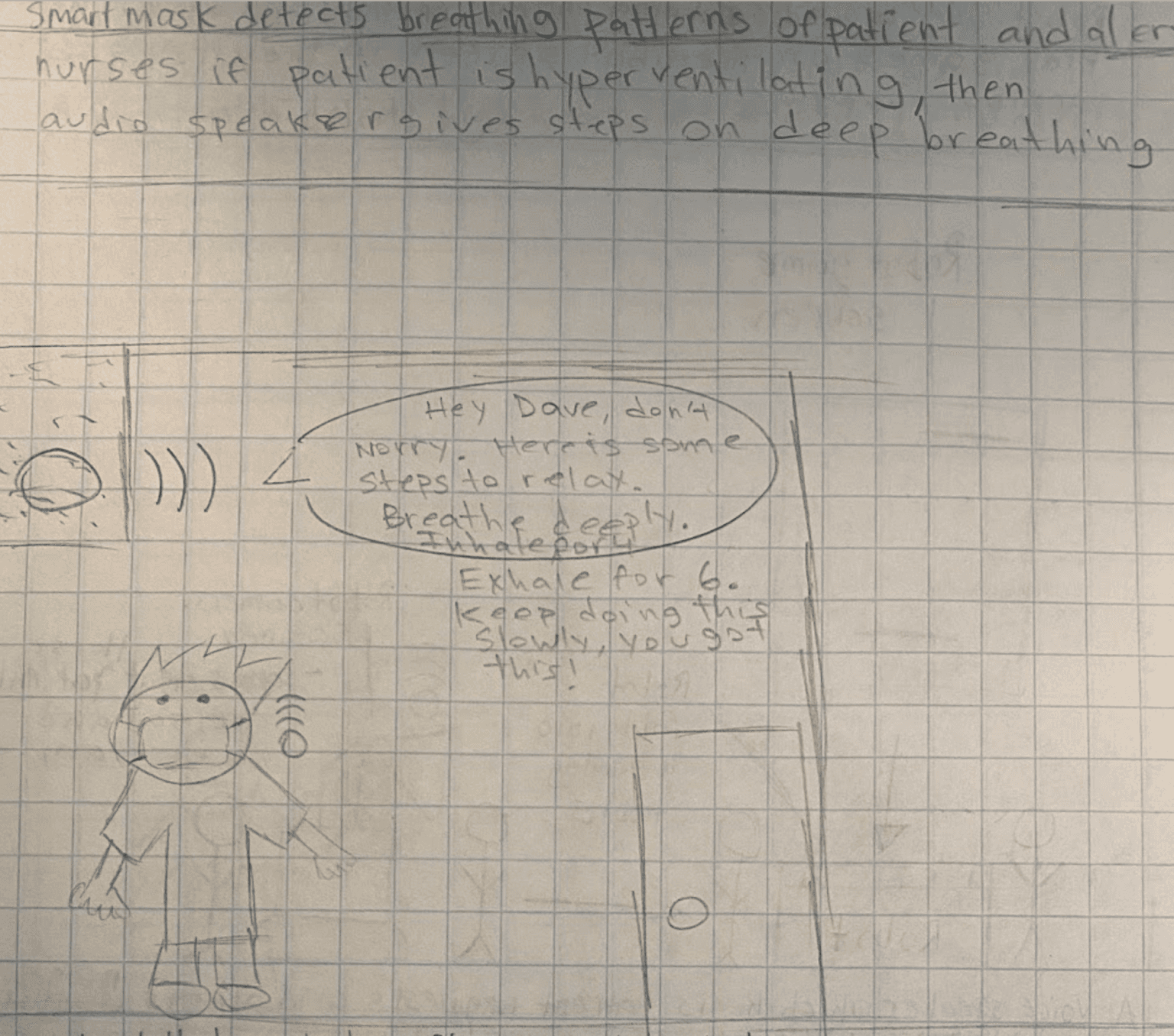
Sketch 4
Smart mask senses patient hyperventilating, smart speaker guides breathing exercise.
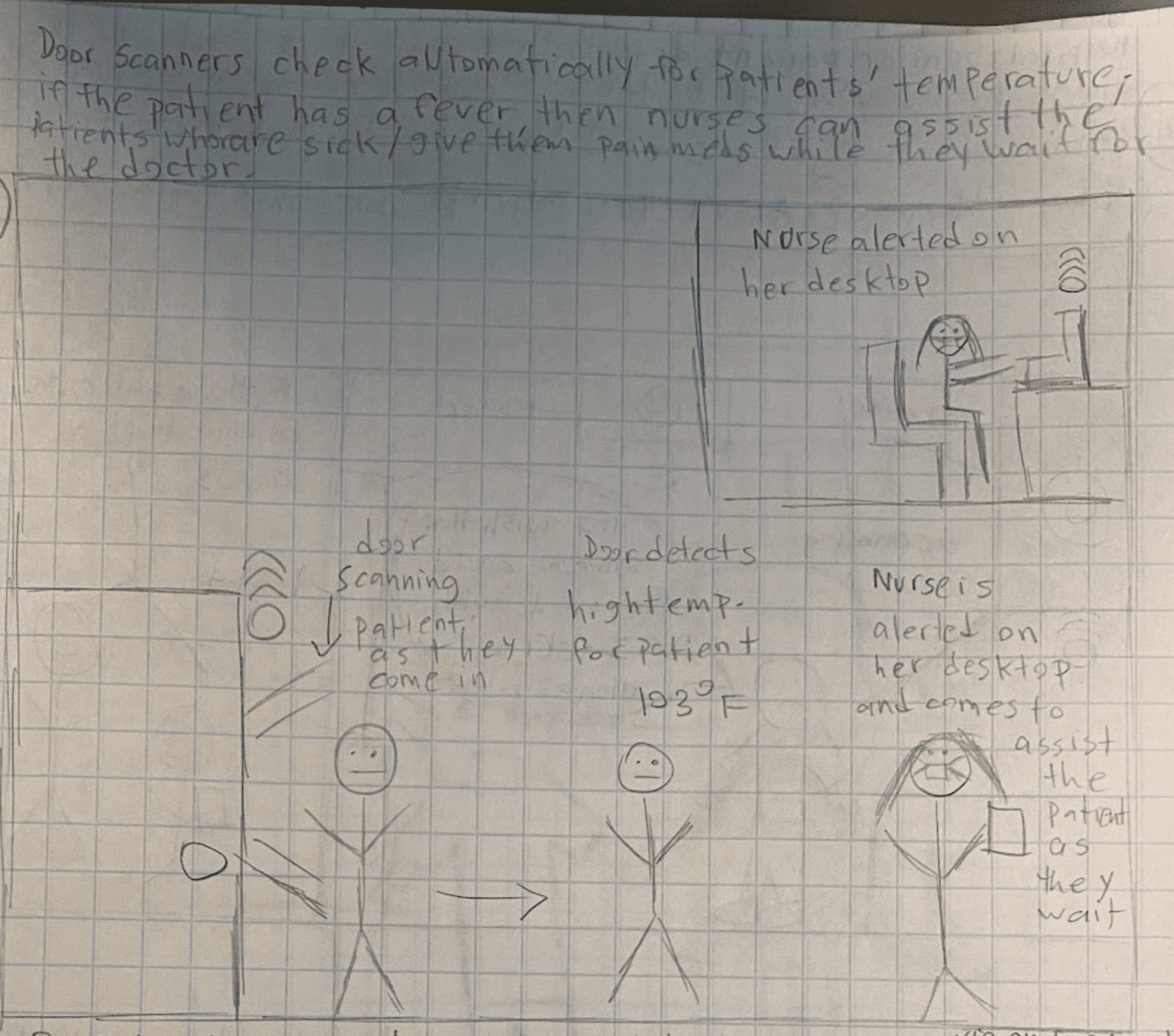
Sketch 5
Hospital door frame detects high temperature of patient, alerting nurses for immediate assistance.
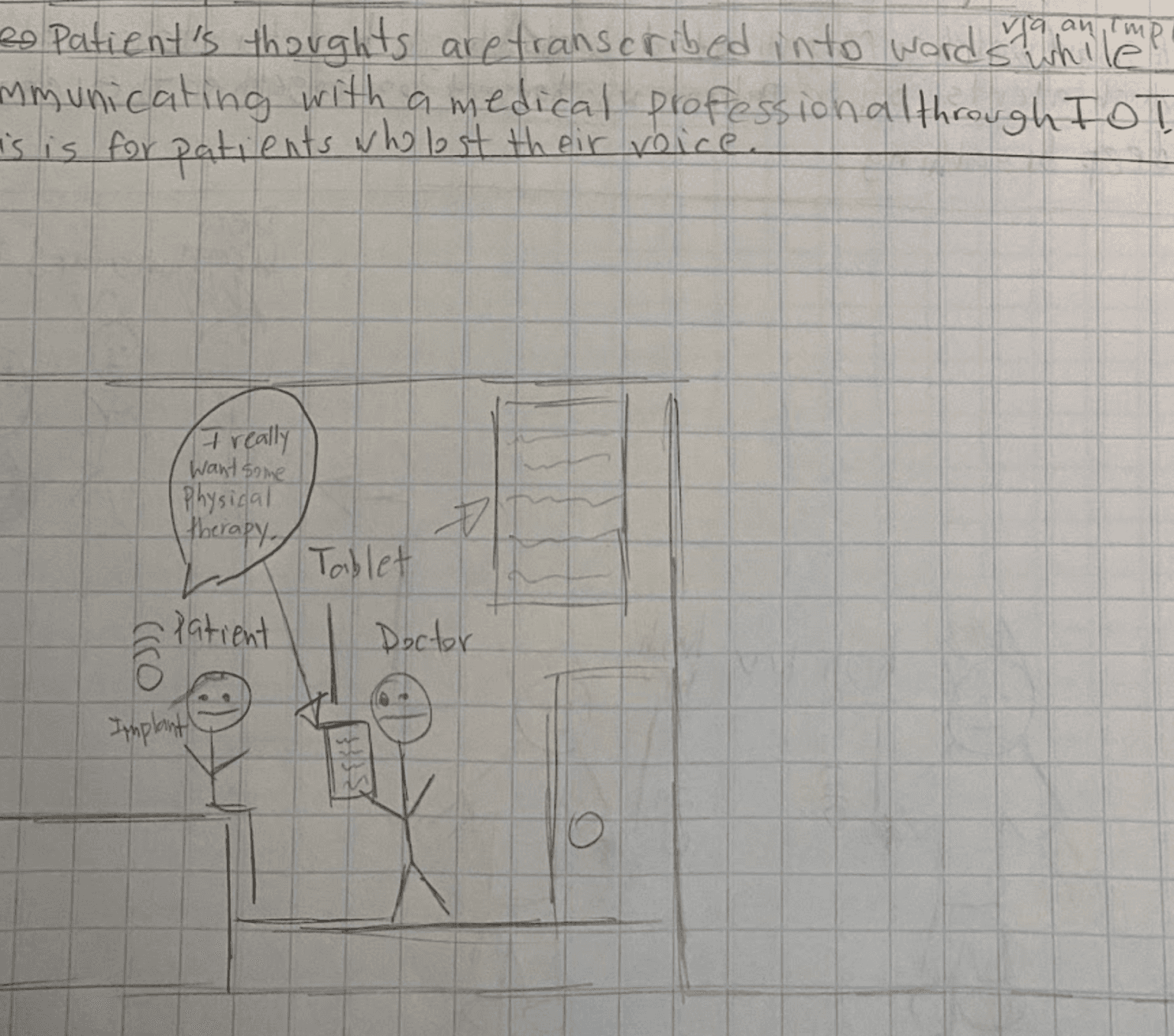
Sketch 6
Voiceless patient's thoughts transcribed via IOT for doctor's tablet.
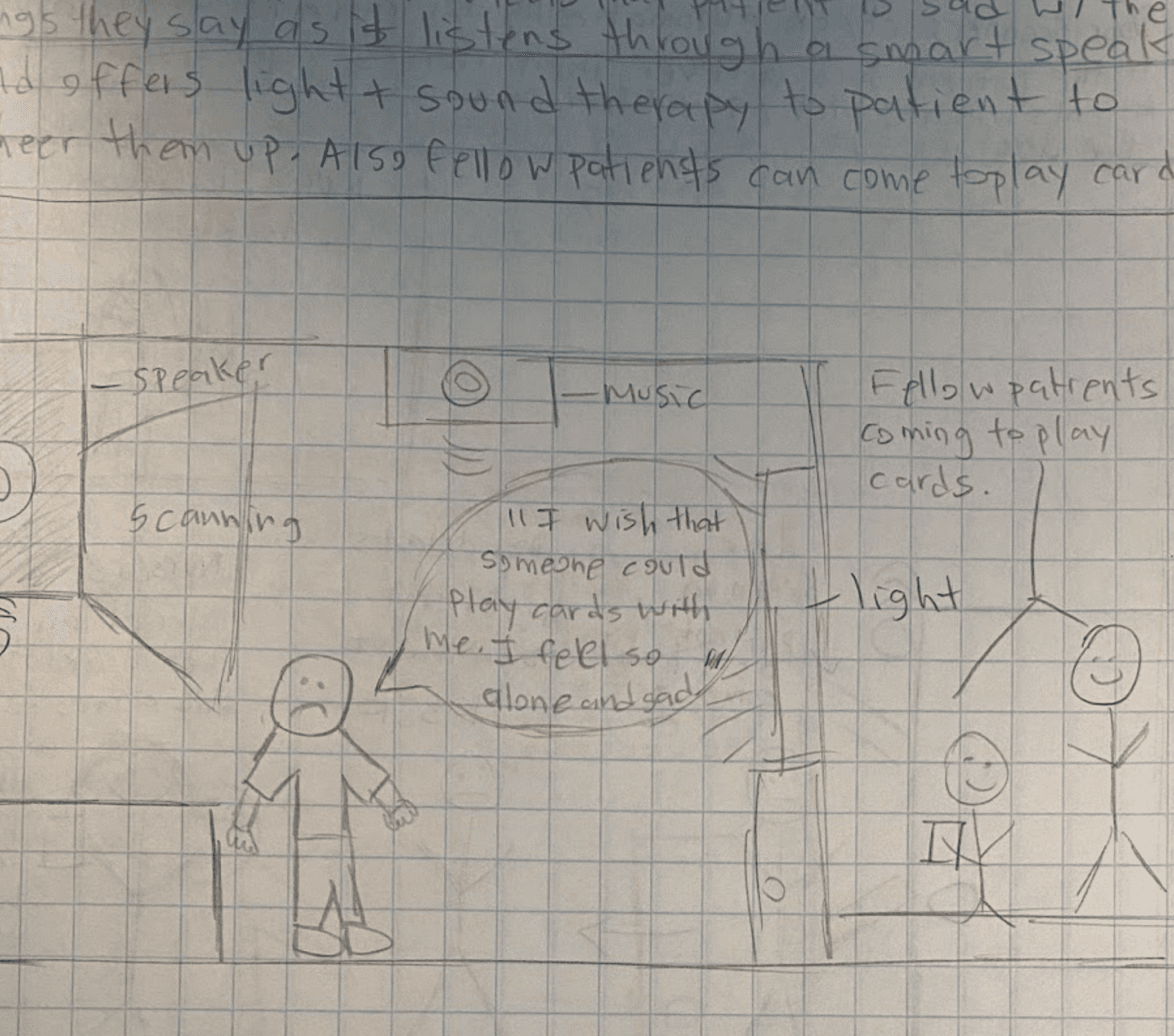
Sketch 7
A smart speaker observes a patient’s loneliness through what he says and prompts nearby patients to engage with him.
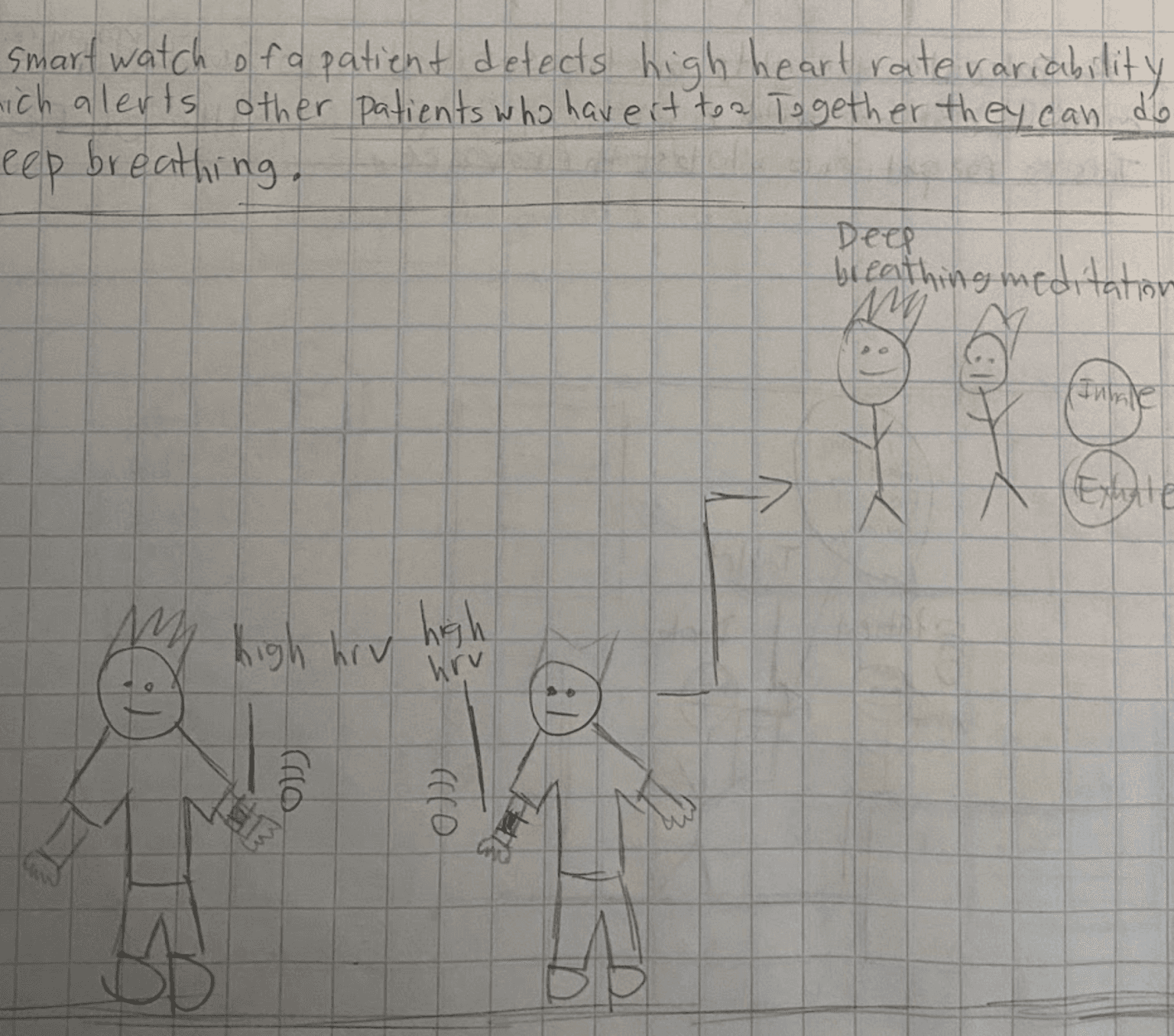
Sketch 8
A smart watch detects high heart rate for two patients and encourages them to engage in a deep breathing exercise together.
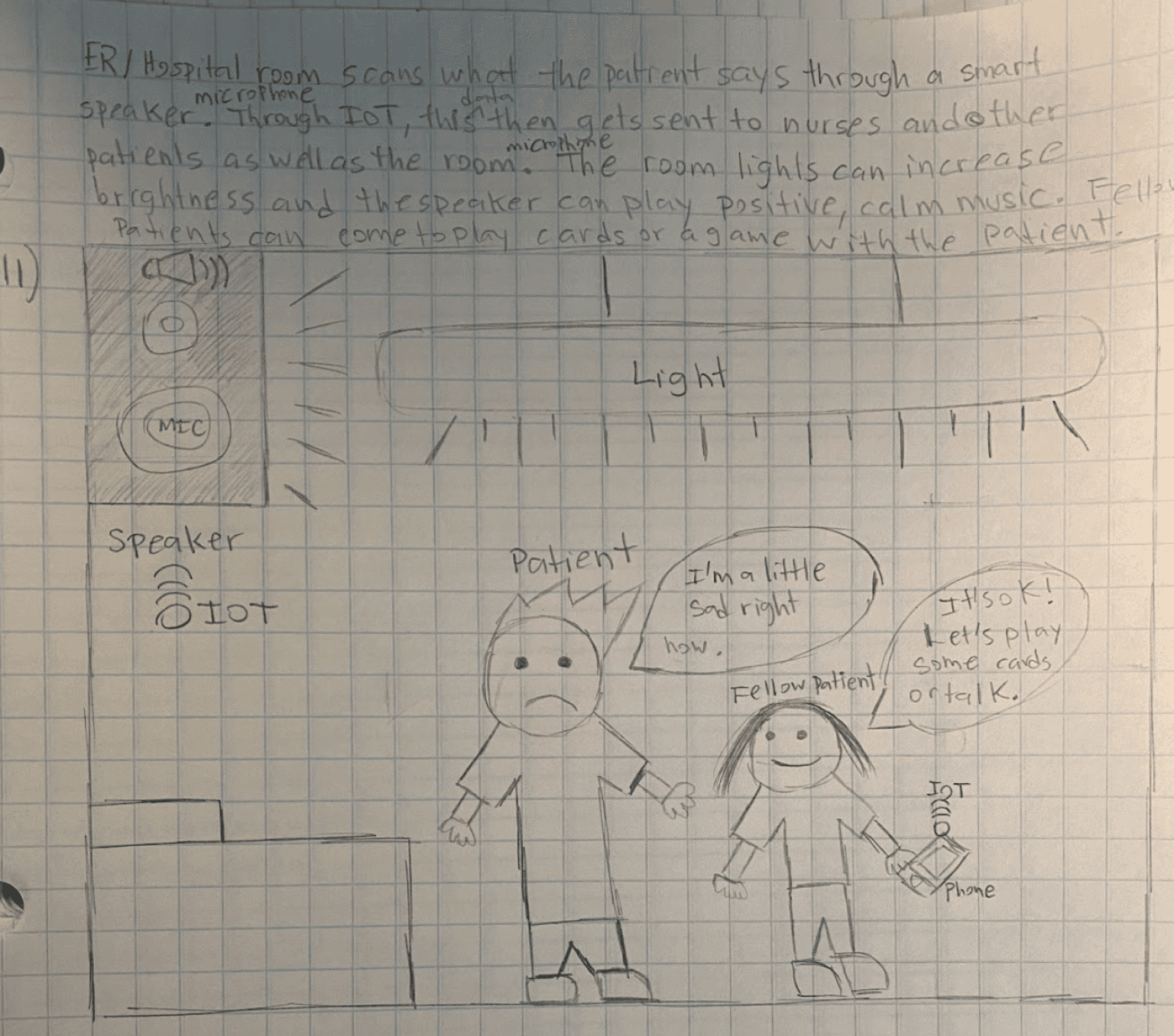
Sketch 9
Smart devices surround the patient: a speaker detects his mood, alerts staff or nearby patients, plays fitting music. The lighting adjusts to enhance his well-being.
System Flow Chart
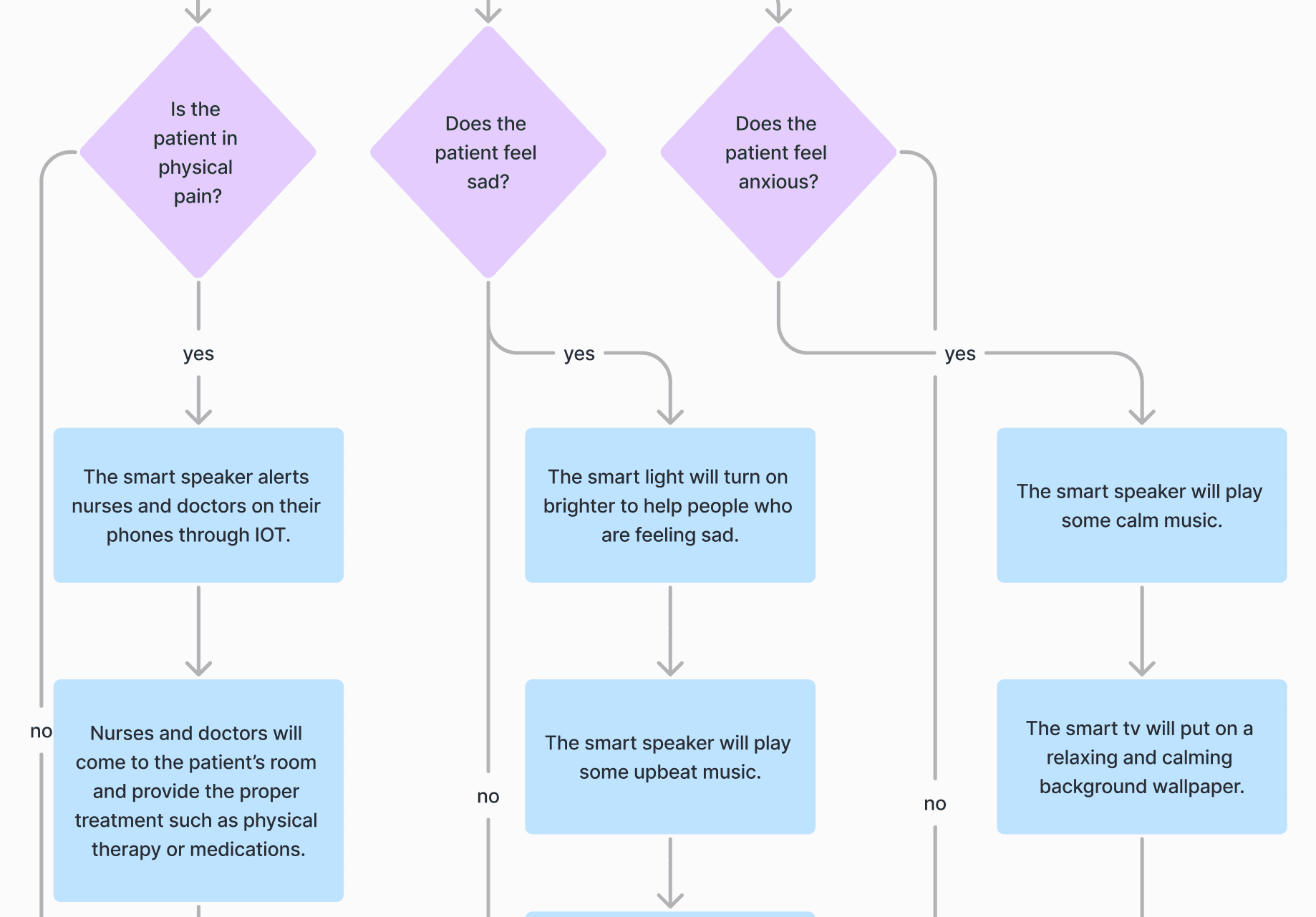
I designed a flowchart to map patient interactions in a smart hospital room, aiming to create an optimal environment that enhances patient care and quality.
The system adjusts based on the patient's needs: for physical pain, it facilitates medical care; for depression, it adjusts lighting, plays upbeat music, and offers entertainment; for anxiety, it provides calming music and a serene TV background.
Smart Environment Visual
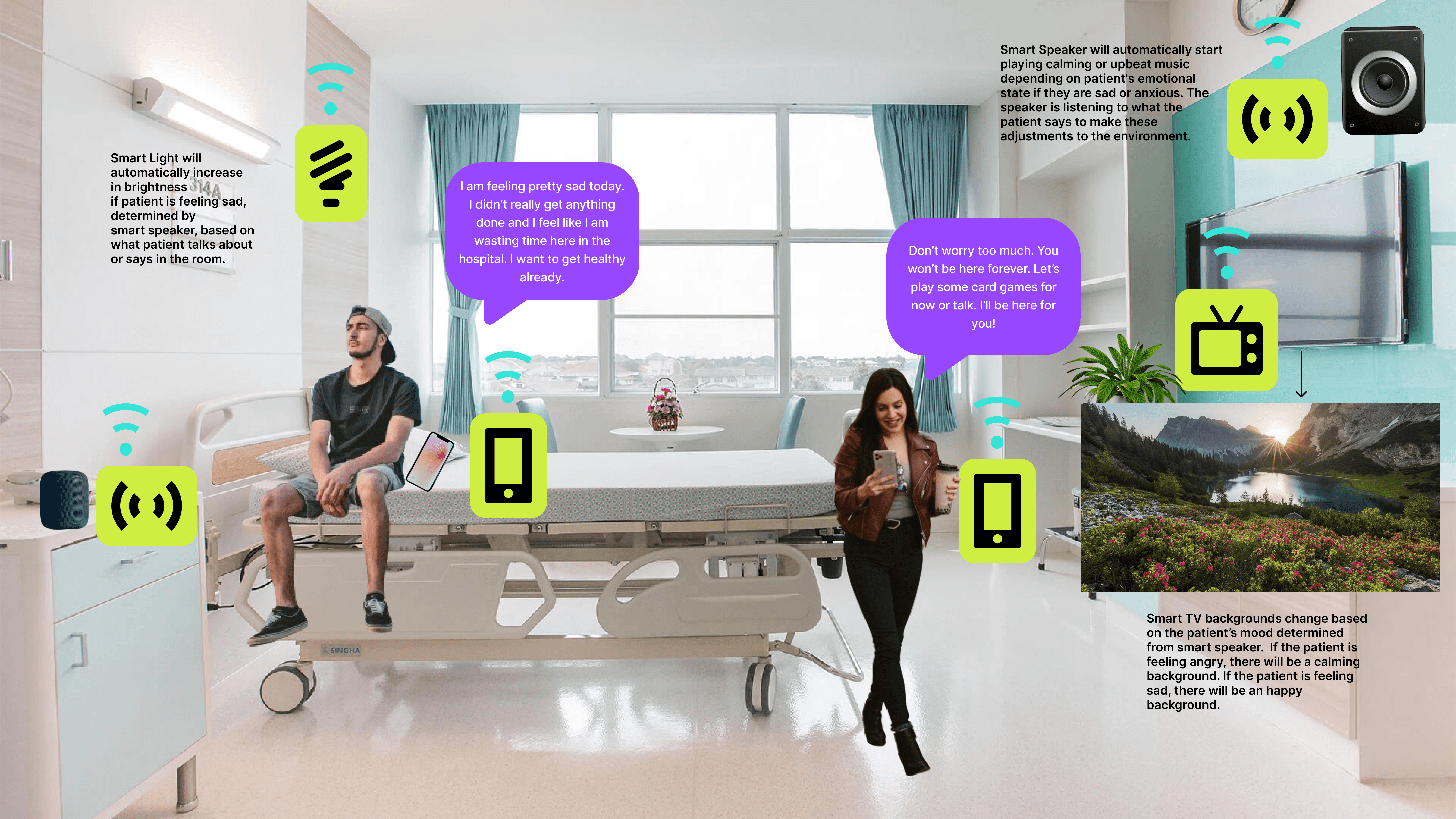
I created a smart environment visualization to show the patient experience. When a patient feels sad and lonely, the smart speaker plays upbeat music, the smart light brightens, and the TV displays a cheerful background. Meanwhile, a fellow patient, alerted to the distress signal, comes over to offer support and companionship.
Core Screens
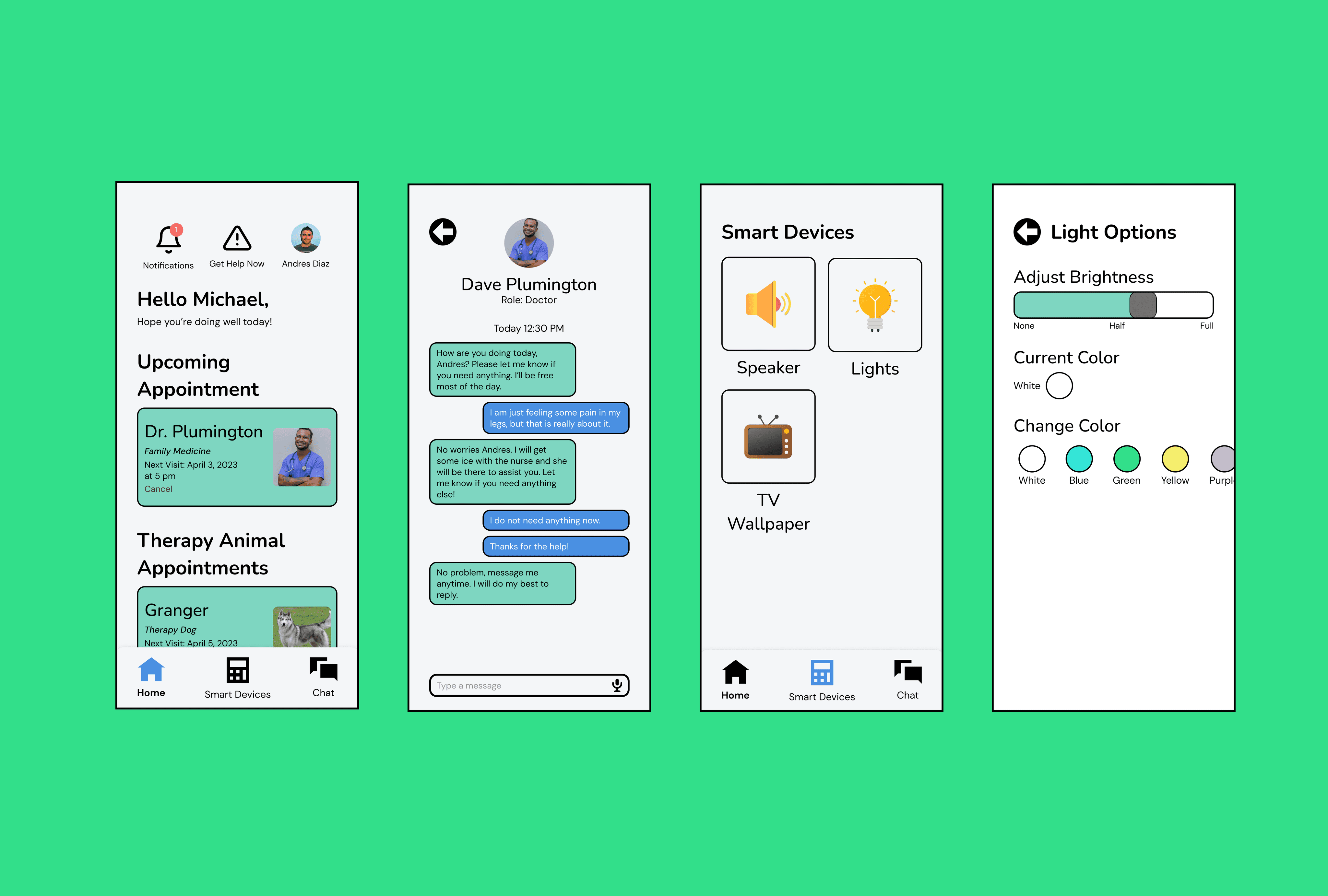
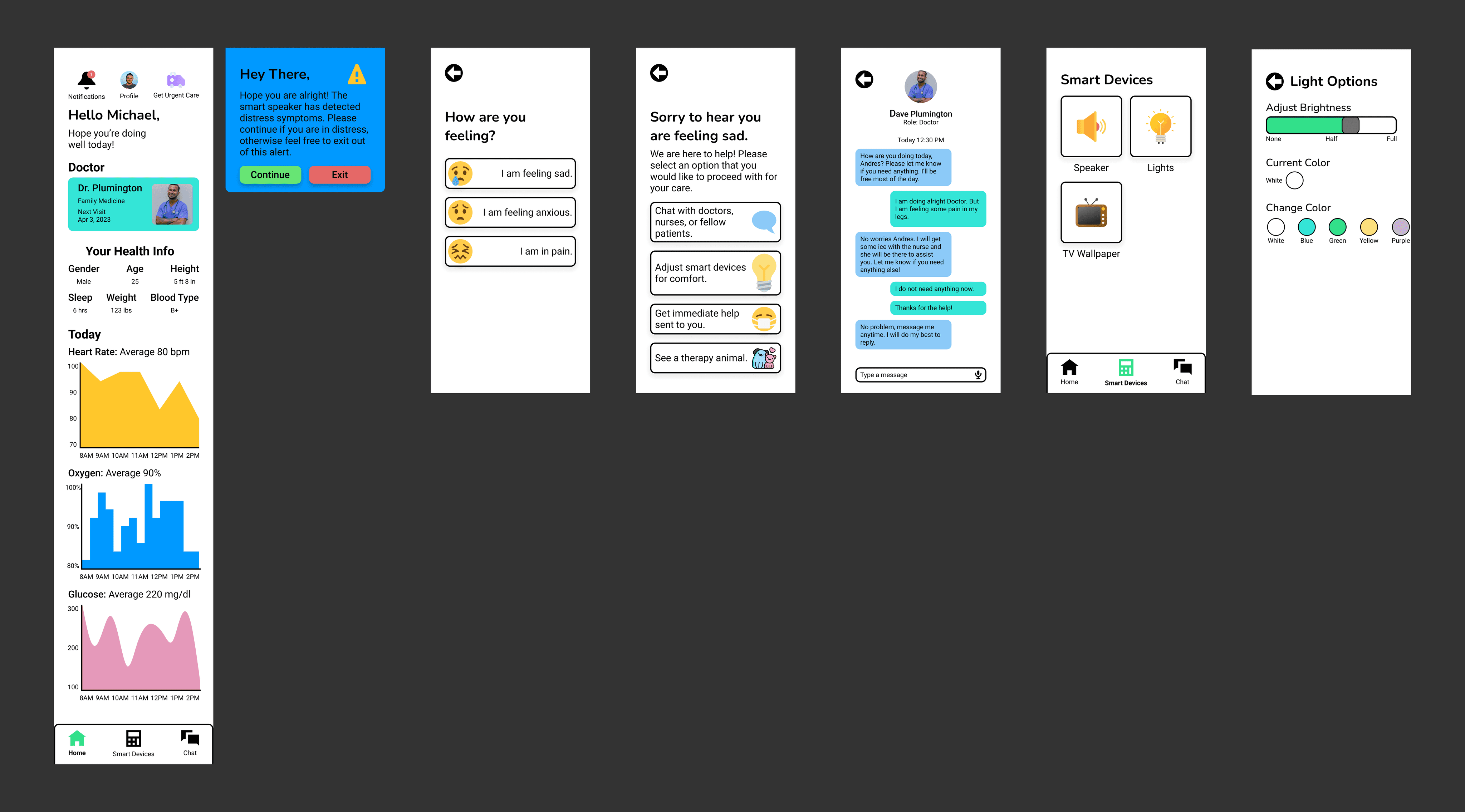
After developing the system flowchart and smart environment visualization, I outlined the user flow and core screens for my UI prototype.
User Flow
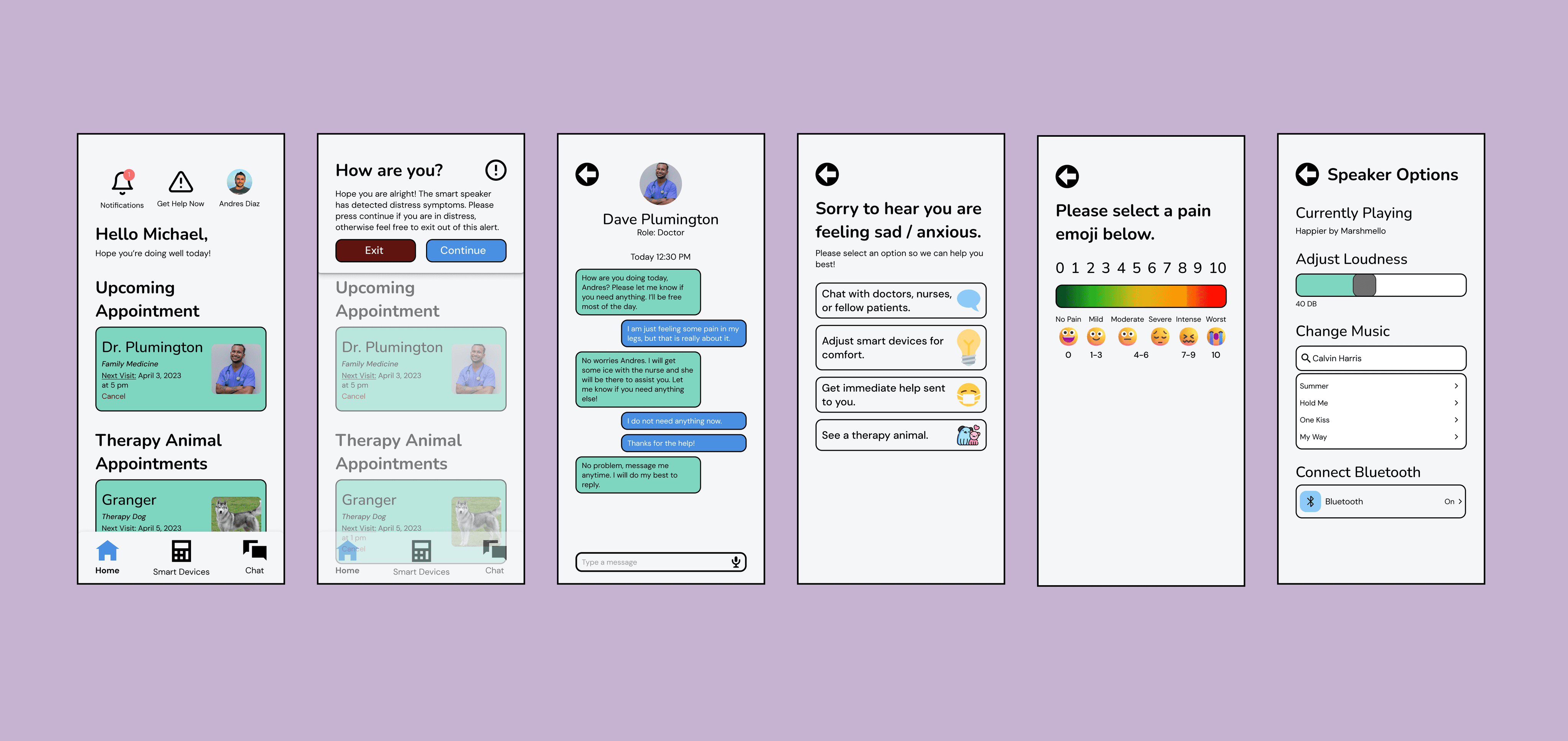
Patients can select smart speaker alerts to receive urgent care, adjust smart devices for comfort, message medical staff/fellow patients, or schedule a therapy animal visit.
Patient Home
Displays health data and smart speaker alert options.
Feelings/Emotions
Allows patients to select their current mood.
Chat
Enables messaging with patients, nurses, or doctors.
Urgent Care
Provides immediate medical assistance.
Therapy Animal
Schedules visits with therapy animals.
Help Options
Offers action plans based on the patient's emotions.
Smart Devices
Adjusts speaker, lighting, or TV settings.
Design Feedback and Iteration
After creating my initial prototype and designs, I attained feedback from my professor of my Masters in HCI and design prototyping class. The feedback was useful for me to improve both the patient experience as well as the design of the app.
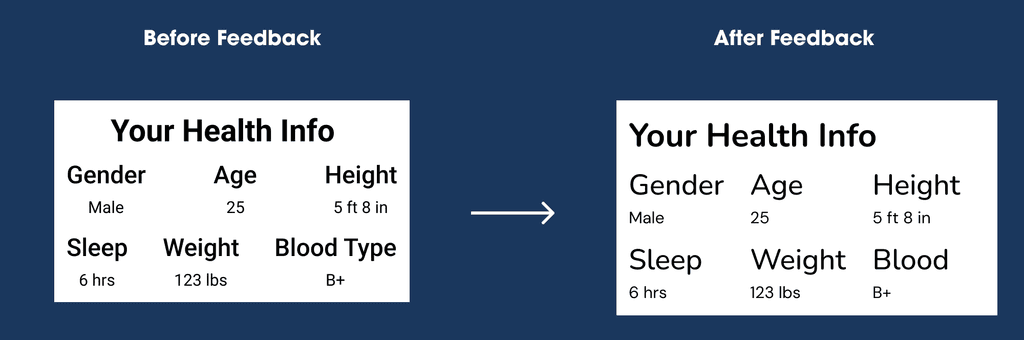
Headings and Body Text Sizing
Differentiate between larger headings and body text more distinctly for better typography. Create at least a 50% difference (UI Design Change).
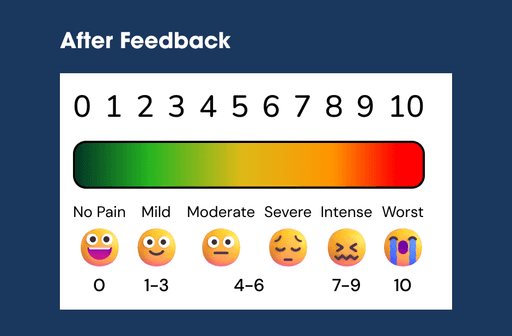
Pain Scale
Create a pain scale for when a patient selects the "I am in pain" option in the "How are you feeling" screen. The pain scale is commonly used across hospitals and will allow patients to seamlessly transition to using the app (Patient Experience Change).
Alignment of Health Info
Left-align the health info on Home page and utilize a grid system to ensure proper alignment and spacing here (UI Design Change).
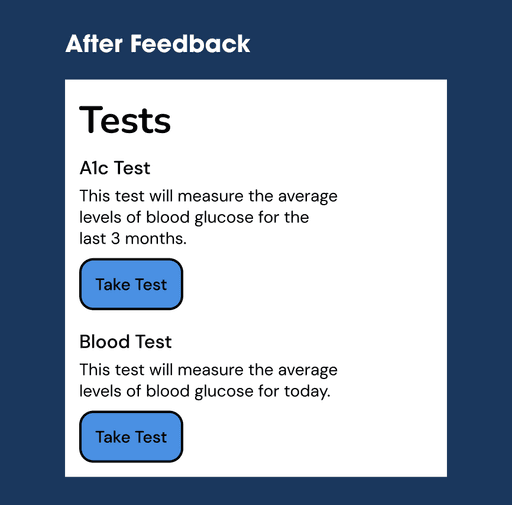
Health Tests
Include health tests for the patient to see on the home page (Patient Experience Change).
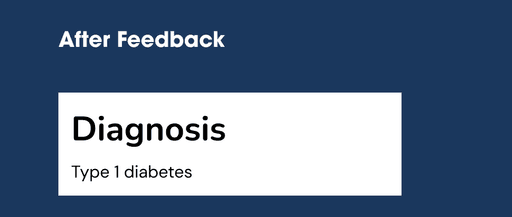
Patient Diagnoses
Include a patient diagnoses on the home page for the patient to discuss with their medical care team/family and for self knowledge (Patient Experience Change).
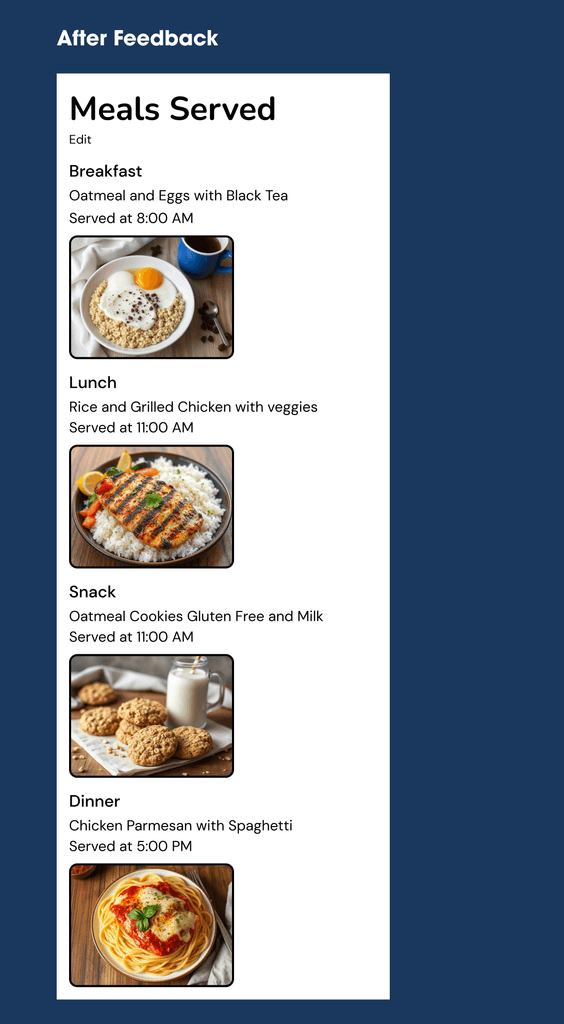
Meal Plan
Include a meal plan so patients do not have to worry about their food situation (Patient Experience Change).
Impact
The design iterations refined the patient experience, and improved both the app’s visual appeal and its minimalist style. Patients can now address their emotional and physical needs in a smart hospital environment, feeling safer and more in control of their recovery with these smart devices.
Cohort member 1 UCI
"I really liked how you engaged in research to create a transformative and empowering smart environment health care tool to help patients enrich their lives.”
Cohort member 2 UCI
"If I were a patient, I would definitely use this tool to help me in my recovery and I feel it would be way less stressful."
Cohort member 3 UCI
“As a patient, I would eagerly use this tool for my recovery—it promises a much less stressful experience and greater peace of mind.”
Go to top